

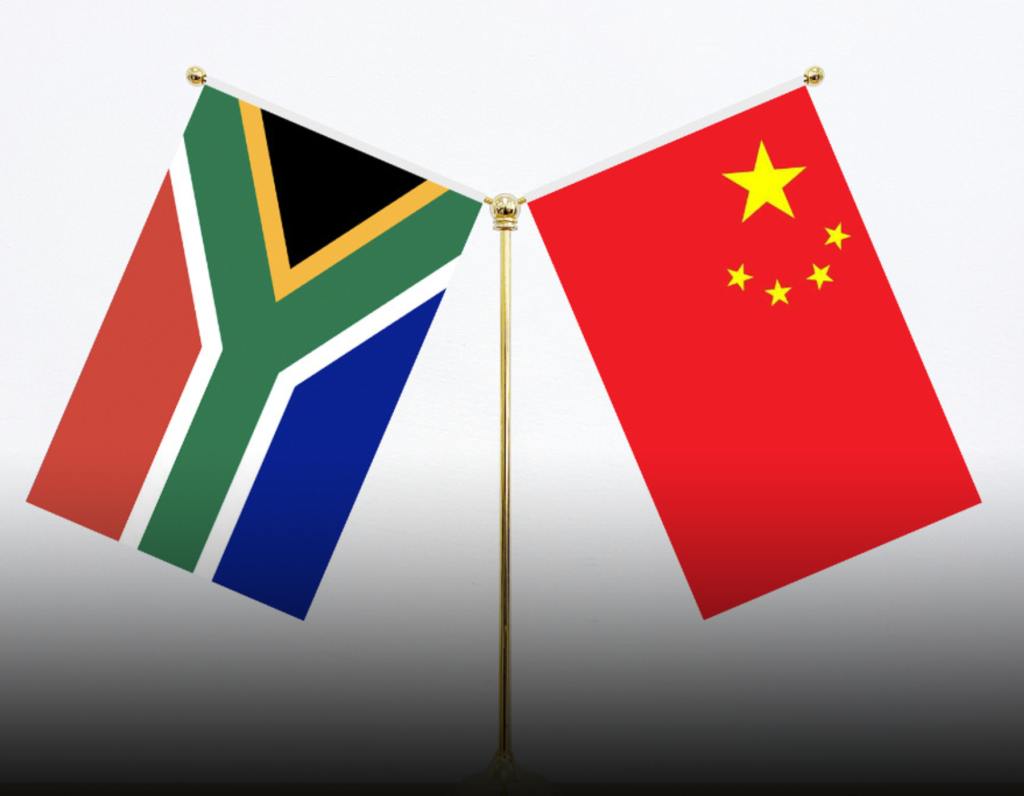
Africa’s fashion and textile industry converged on Cape Town this week, as one of the continent’s biggest sourcing exhibitions opened with a distinctly China-South Africa flavor and a sense among exhibitors that the ground rules for their trade have just shifted in their favor.
China Premium Textile South Africa and Allfashion Sourcing 2026 kicked off Tuesday at the Cape Town International Convention Centre, running through Thursday. The annual event brings together manufacturers, suppliers, designers, retailers and buyers from across the textile, apparel and footwear industries and this year drew around 150 exhibitors, with nearly half of them Chinese firms. Fashion shows, forums and panel discussions running throughout the three-day program.
South Africa is China’s largest trading partner on the African continent, while China has held the top spot as South Africa’s largest trading partner for 17 straight years, with two-way trade reaching $53.58 billion in 2025. Textile is a traditional pillar of China-South Africa economic cooperation and a key sector for coordinating industrial capacity and market access between the two countries.
China’s zero-tariff policy, which took effect May 1 for 53 African countries with diplomatic ties to Beijing, now covers South African-grown cotton, textile raw materials and related products. The policy would substantially cut export costs for South African textile and garment manufacturers, widen their access to the Chinese market, and inject fresh momentum into China-Africa trade and investment more broadly.
That optimism was echoed across the exhibition floor. Ziev Shani, a young South African entrepreneur fluent in Mandarin whose family’s China trade ties stretch back to his father’s generation, said his own five years of working with Chinese partners have convinced him the two countries are positioned for a genuinely win-win partnership going forward. Among the Chinese exhibitors, Hangzhou Golden Shell Import and Export Co. was attending for a fourth consecutive year after more than a decade cultivating the South African market, as the company has already setted up locally in Cape Town and is now exploring a Durban factory, describing South Africa as a springboard into the broader African market.
First-time exhibitor Zhejiang Huida Textile and Garment Co. reported early momentum too, with general manager Wang Lihong telling Xinhua she had reached preliminary agreements with three South African companies on the opening day alone. She pushed back on the old stereotype that Chinese manufacturers compete purely on price, arguing that reliable quality and continuous innovation are now the industry’s real selling points across South Africa and the wider continent.
The South African Footwear and Leather Export Council, which hosted a collective industry pavilion at the show, offered a view from the other side of the trade relationship. Executive Director Nerisha Jairaj noted that China already supplies footwear and leather components including soles, insoles and hardware to more than 50 African countries, while South African firms can offer Chinese consumers niche, limited-edition products in return, a complementary dynamic carries real potential if both sides keep communicating. On the zero-tariff policy specifically, Jairaj said having the world’s largest exporter open its doors duty-free gives smaller producers like South African footwear and leather firms a genuine opening into the Chinese market they might not otherwise get.
The Cape Town show lands at a pivotal moment for China-South Africa commercial ties. The two governments signed a framework economic partnership agreement, known as China Africa Economic Partnership Agreement, in February 2026, with Chinese Ambassador to Pretoria Wu Peng confirming Beijing would not seek reciprocal tariff cuts from South Africa under the arrangement, easing early concerns from local industries like autos about potentially destabilizing terms. South Africa’s Trade Minister Parks Tau has welcomed the framework as opening new opportunities for South African businesses in mining, agriculture, renewable energy and technology, while some South African trade analysts have cautioned that the real prize lies not in trade volume alone but in whether the country can use the opening to build genuine domestic processing and manufacturing capacity, rather than simply exporting more raw material.
That caution reflects a longstanding pattern in the relationship: South Africa has historically exported minerals and raw agricultural goods to China while importing machinery, electronics and finished manufactured products, leaving a trade balance that tilts firmly toward Beijing. Both governments have periodically had to manage friction points around that imbalance, including South African anti-dumping tariffs imposed on Chinese steel in recent years.
Even so, the diplomatic relationship remains among China’s closest on the continent. South Africa and China are both founding BRICS members, and senior officials from both sides met as recently as late June 2026 to reaffirm cooperation within the bloc with South African Minister in the Presidency Khumbudzo Ntshavheni describing China as a reliable, longstanding friend and reaffirming South Africa’s commitment to the one-China policy. The relationship has been formalized as a comprehensive strategic partnership since 2010, and cooperation now extends well beyond trade into satellite navigation, banking regulation and a $290 million yuan-denominated loan from the China Development Bank to the Development Bank of Southern Africa in 2025 an early experiments in local-currency development financing.
For the textile executives working the floor in Cape Town this week, though, the bigger geopolitical picture matters less than the order books. With zero tariffs now in place and a fresh crop of preliminary deals already signed on day one, the exhibition’s real measure of success will be how many of those handshake agreements turn into shipping containers over the months ahead.