

Chinese automaker Chery has spent years selling cars in South Africa. Now, with a former Nissan factory in Pretoria bearing its badge, it’s betting that building them locally, not just shipping them in, is what will determine whether that success lasts.
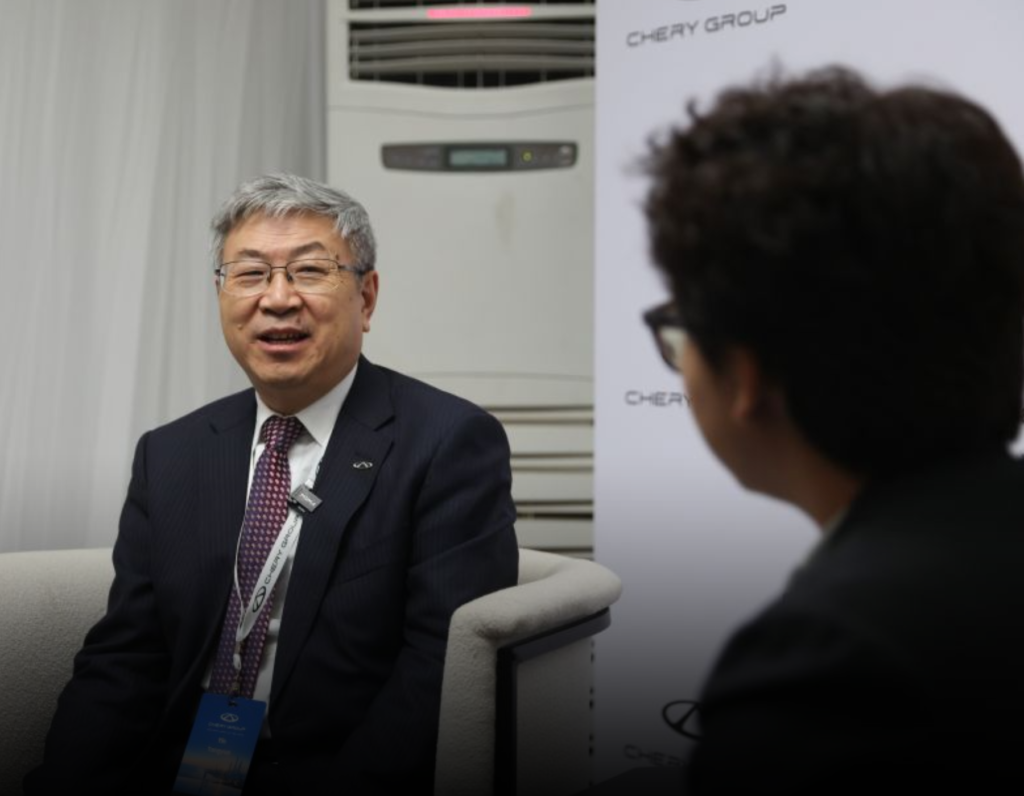
Speaking to Xinhua at the launch ceremony of Chery’s new manufacturing plant in Rosslyn, north of Pretoria, company chairman Yin Tongyue laid out a broader thesis for where Chinese automakers go next as export volumes keep climbing. China exported 5.096 million vehicles in the first half of 2026 alone, including 2.355 million new energy vehicles, according to official figures, but Yin argued that raw export growth has a natural ceiling. “In the global automotive industry, large-scale vehicle exports are typically followed by localized production,” he said, framing the shift as the logical next stage for an industry that has already proven it can compete internationally on price and technology.
Yin was direct about what that shift requires in practice. “Chinese companies are not simply exporting products. We are contributing to local economic development,” he said, adding that Chinese automakers can only sustain long-term growth abroad if the local economies they operate in keep growing and local purchasing power keeps rising alongside them. He described localization as serving a dual purpose, creating “a more stable operating environment” for the business itself while also “strengthening local recognition and acceptance of Chinese enterprises.” Reflecting on Chery’s own transition, he put it plainly: “We have moved from being an importer to a manufacturer, from a market participant to a long-term partner in South Africa’s industrial development.”
The plant behind those words has its own story. Chery’s Rosslyn facility began life in 1963 as one of South Africa’s longest-running automotive sites, most recently used by Nissan to assemble the Navara bakkie. Nissan’s global restructuring, part of a plan announced in 2025 to close seven plants worldwide. Left Rosslyn underused after production of the popular NP200 bakkie ended in 2024, and Chery agreed in January to acquire the land, buildings and associated stamping plant. Nissan Africa president Jordi Vila said at the time that the arrangement would secure employment for the majority of the existing workforce while preserving opportunities across the supplier network.
That commitment held: at the plant’s official opening on July 3, Chery confirmed all 692 existing employees would be retained, with the expansion expected to create roughly 3,000 additional jobs over time. The ceremony drew South African Deputy President Paul Mashatile, Gauteng Premier Panyaza Lesufi and Chinese Ambassador to South Africa Wu Peng. First vehicles, the Jetour T-Series, Jaecoo J5 and Chery Tiggo Cross, are expected to roll off the line by mid-2027. Initial production targeted at 15,000 units during the ramp-up year before scaling toward an annual capacity of 50,000. Yin has said Chery’s longer-term ambition is to exceed 100,000 annual vehicle sales in the South African market alone; the brand sold more than 25,000 units in South Africa in 2025, good for eighth place nationally and a 26.7 percent year-on-year sales increase.
Yin framed South Africa’s appeal in specific terms: home to more than 1.5 billion people continent-wide and among the world’s fastest-growing emerging markets, Africa offered Chery a genuine growth opportunity, while South Africa itself, with its comparatively mature automotive industry and existing supply chain, provided an ideal operational base for expansion across the wider continent. “Taking over existing production capacity and retaining local employees is an important part of our overseas investment strategy,” he said, arguing that the approach both preserves jobs and creates new ones, generating goodwill with local communities and government in the process.
Chery is not alone in making that bet. More than a dozen Chinese auto brands including; GWM, BYD and BAIC. They have entered the South African market and Chery’s Rosslyn acquisition makes it the third Chinese automaker to manufacture vehicles domestically, following BAIC’s 2018 plant in Gqeberha and Foton’s 2025 addition of the Tunland G7 bakkie at the same facility. South Africa’s Department of Trade, Industry and Competition has welcomed the wave of investment as it works to revise national automotive policy, with Trade Minister Parks Tau specifically noting the sector’s importance as an anchor industry for manufacturing and job creation.
Yin also sketched a more ambitious version of what localization could eventually mean. Beyond factories building finished cars, he said Chinese companies could increasingly export entire industrial ecosystems rather than vehicles alone. Pairing NEVs with photovoltaic technology, energy storage systems and charging infrastructure. “By leveraging China’s mature technological capabilities and supply chain strengths, we hope to provide integrated solutions that support the green transition of more countries,” he said.
Chery’s Rosslyn investment lands squarely within a China-South Africa relationship already running at record volume elsewhere. China has been South Africa’s largest trading partner for 17 consecutive years, with two-way trade reaching $53.58 billion in 2025, and the two countries signed a framework economic partnership agreement in February 2026 that Chinese officials say will not require reciprocal tariff cuts from Pretoria. That framework has already coincided with a Cape Town textile trade show generating fresh export deals and a new conservation-cooperation agreement between China’s Mount Tai and South Africa’s Table Mountain National Park. Officials on both sides argue, of a relationship broadening well beyond its traditional base in mining and raw-material trade.
The automotive sector adds a manufacturing dimension to that broadening. For Yin and Chery, though, Thursday’s remarks suggested the company sees Rosslyn as something more specific than diplomatic symbolism: a working template for how a Chinese automaker earns durable standing in an African market, not by shipping in finished cars but by embedding itself in the industrial fabric of the country buying them.