

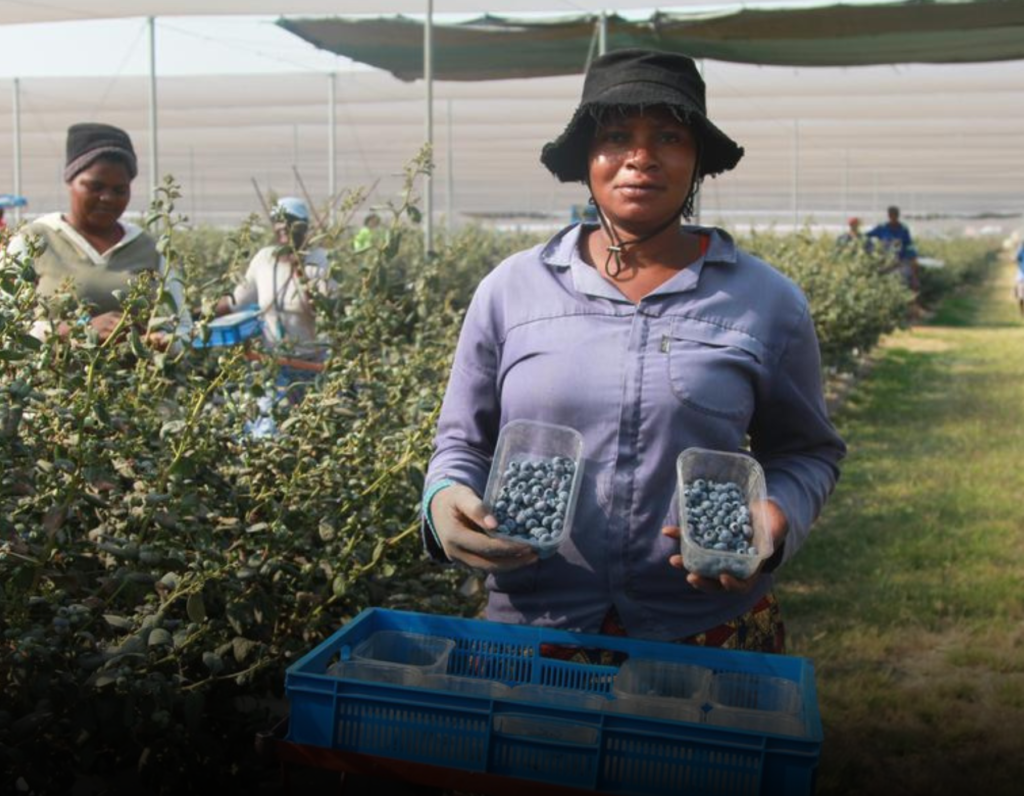
Zimbabwe has successfully exported its first batch of fresh blueberries to China, opening a new chapter in agricultural trade between the two countries and signaling growing opportunities for African farmers in high-value export markets.
The shipment, which recently departed for the Chinese market, follows the finalization of phytosanitary protocols and market access agreements between Harare and Beijing. Officials on both sides have described the development as a milestone that reflects years of negotiation and deepening bilateral cooperation in agriculture.
Zimbabwean authorities hailed the breakthrough as a major boost for the country’s horticulture sector. “This is a significant achievement for our farmers and exporters, who can now tap into one of the world’s largest consumer markets,”. An agriculture official said, noting that blueberries are among Zimbabwe’s fastest-growing export crops due to favorable climate conditions and increasing investment.
China’s decision to open its market to Zimbabwean blueberries aligns with its broader push to increase imports of agricultural products from Africa, particularly under frameworks such as the Forum on China-Africa Cooperation (FOCAC). The move also complements Beijing’s recent expansion of zero-tariff treatment. For dozens of developing countries, aimed at boosting exports from the Global South.
Industry players say access to China could significantly scale Zimbabwe’s blueberry production. Demand for premium fresh fruit has surged among China’s growing middle class, making it an attractive destination for exporters seeking higher-value markets.
“China offers a vast and dynamic market for fresh produce and Zimbabwean blueberries are well-positioned to compete on quality,” a trade analyst noted. Adding that the development could encourage further diversification of Zimbabwe’s agricultural exports.
The new export corridor is expected to benefit not only large-scale producers but also smallholder farmers integrated into supply chains. Increased demand could drive investment in cold-chain logistics, packaging and quality standards, key areas for improving competitiveness.
Zimbabwe’s horticulture industry has been steadily recovering and expanding, with blueberries emerging as a leading export alongside citrus and flowers. The China market is likely to accelerate this growth, providing more stable demand and better price prospects.
The blueberry export milestone reflects broader economic ties between China and Zimbabwe, which have strengthened over the years across multiple sectors. China has been a key partner in infrastructure development, energy projects and mining investments in Zimbabwe.
Under the Belt and Road Initiative (BRI), cooperation has extended to transport networks and industrial capacity, helping facilitate trade and production. In agriculture, Chinese support has included technical cooperation, training programs and investment in agro-processing.
Analysts say the latest development demonstrates how bilateral cooperation is evolving beyond traditional sectors into high-value agriculture and trade diversification.
With the first shipment successfully completed, attention is now turning to scaling up volumes and ensuring consistent supply to meet Chinese demand. Exporters will need to maintain strict quality and safety standards, while government agencies are expected to continue supporting the sector through policy and infrastructure improvements.
If sustained, the new trade link could position Zimbabwe as a key supplier of premium berries to Asia. Reinforcing China’s role as a major market for African agricultural exports.
For Zimbabwe’s farmers, the shipment is more than just a commercial transaction, it is a signal of new possibilities in global trade, where African produce finds its place on the shelves of distant markets.