

As the global race for technological leadership intensifies, South Africa is positioning itself not just as a participant – but as a strategic collaborator. And at the center of that vision is China.
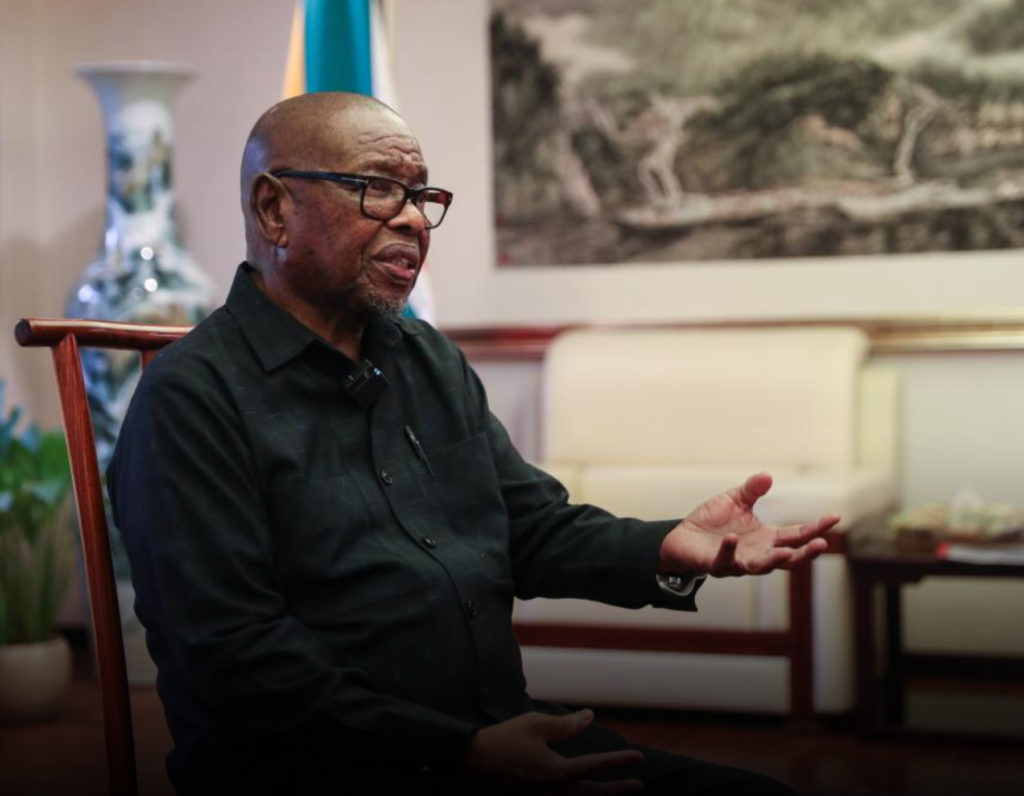
In a recent interview, South Africa’s Minister of Science, Technology and Innovation, Blade Nzimande, outlined plans to deepen cooperation with China across critical sectors including artificial intelligence (AI), clean energy, and youth-driven innovation.
Nzimande described the existing relationship as already “fairly extensive,” but emphasised that the next phase must focus on frontier technologies.
Artificial intelligence stands out as a priority. According to the minister, joint research initiatives and knowledge-sharing platforms are the “bedrock” of cooperation, with plans to elevate AI as a central pillar of bilateral engagement.
He further noted that China’s advanced technological ecosystem offers opportunities for inclusive innovation, particularly for developing economies seeking to bridge digital and industrial gaps.
Beyond AI, clean energy is emerging as a key frontier. South Africa is seeking closer collaboration with China in areas such as hydrogen energy, green ammonia, and low-carbon technologies – especially those linked to mining and industrial production.
With its rich reserves of platinum group metals – essential for hydrogen fuel cells, South Africa sees itself as a natural partner in advancing next-generation energy solutions. As Nzimande noted, cooperation in this space is “very important” for the country’s long-term sustainability goals.
The partnership is not new, it is built on decades of structured collaboration.
Since the signing of a bilateral science and technology agreement in 1999, the two countries have implemented over 150 joint research and development projects, spanning fields from astronomy to biotechnology.
One standout example is the Square Kilometre Array (SKA) project, a global radio astronomy initiative in which both countries play key roles – demonstrating how scientific cooperation can extend into cutting-edge global research.
At the heart of this partnership lies human capital. Nzimande highlighted the importance of youth exchanges and researcher mobility, describing young scientists as a “pillar” of bilateral relations.
Programs such as the Young Scientists Exchange Initiative are helping to build a new generation of innovators, fostering collaboration not just between institutions—but between people.
This aligns with broader efforts under frameworks like the Forum on China–Africa Cooperation (FOCAC), where science, education, and innovation are increasingly central to engagement.
Science and technology cooperation is just one dimension of a wider China–South Africa partnership.
The two countries collaborate across trade, infrastructure, health, and global governance platforms such as BRICS and the G20. Recent agreements aimed at boosting trade and investment further reinforce the depth of this relationship, particularly as both nations navigate shifting global economic dynamics.
In parallel, initiatives in healthcare, energy, and industrial development continue to expand, reflecting a comprehensive and evolving partnership.
What South Africa is signaling is clear: the future of its relationship with China will be defined not just by trade—but by innovation.
From AI to clean energy, from research collaboration to talent exchange, the partnership is moving into a phase where knowledge—not just resources—drives value.