

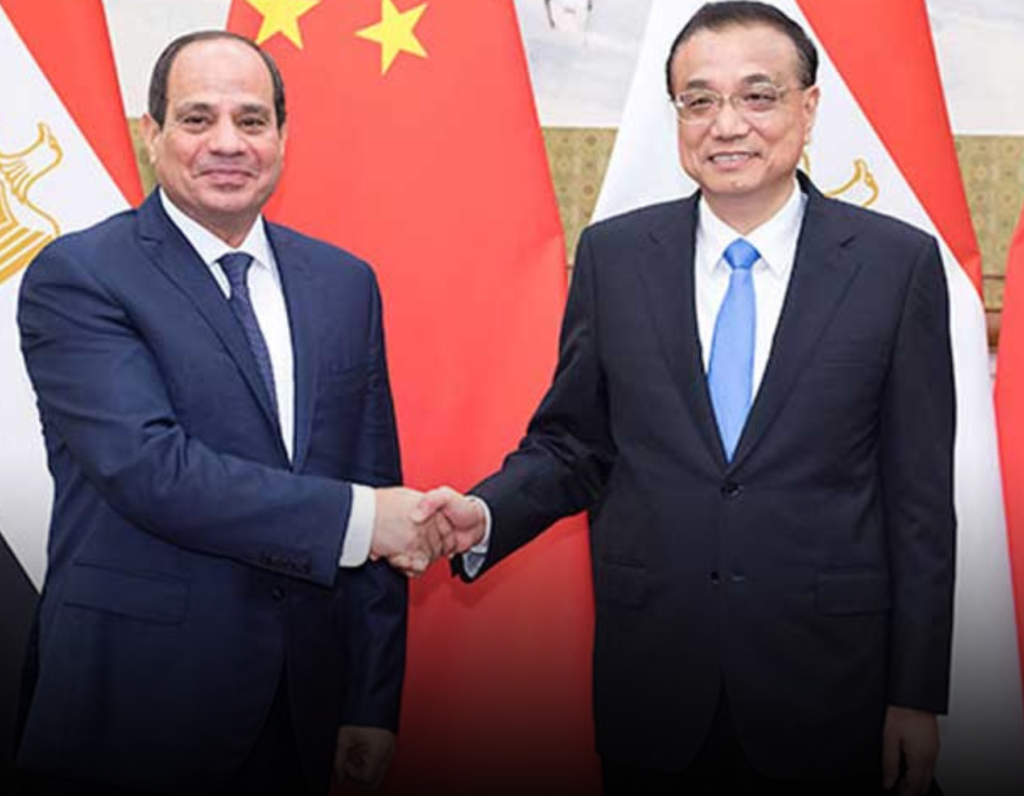
Seventy years after Egypt became the first Arab and African nation to formally recognize Beijing, the relationship between the two countries is being held up as something bigger than a bilateral success story. One Egyptian analyst argues for how developing nations can cooperate with China on their own terms.
Rania Aboelkheir, secretary-general of the Cairo-based Global Forum for Future Studies, told Xinhua the Egypt-China relationship is currently experiencing its strongest momentum in its history, resting on a long political and civilizational legacy alongside deepening economic and strategic interests that have turned the two countries into key partners regionally and globally. She described the trajectory of ties as pointing toward an increasingly promising future, pointing to what she called a genuine convergence between the two nations’ development visions.
Aboelkheir pointed to concrete evidence rather than just sentiment. She singled out the China-Egypt TEDA Suez Economic and Trade Cooperation Zone in Ain Sokhna, an industrial park that has grown to host 185 companies and the Central Business District in Egypt’s New Administrative Capital, anchored by the Iconic Tower, now Africa’s tallest building. Chinese companies, she said, have played a substantial role in propping up Egypt’s economy through direct investment in infrastructure and large industrial projects, and Cairo continues actively courting further Chinese capital across smart cities, technology, green energy, education and tourism. An effort she linked to the alignment between China’s Belt and Road Initiative and Egypt’s own Vision 2030 development strategy.
She also praised the broader suite of Chinese-proposed global platforms, the Belt and Road Initiative, the Global Development Initiative, the Global Security Initiative, the Global Civilization Initiative and the Global Governance Initiative. Describing them as offering developing nations a path to growth that doesn’t come loaded with the conditions typically attached to Western-led financing. In her reading, these initiatives support the Global South by respecting national sovereignty, steering clear of interference in domestic affairs and favoring diplomacy over confrontation in resolving disputes. She pointed specifically to multilateral institutions like the Asian Infrastructure Investment Bank and the New Development Bank as providing flexible project financing without dictating recipient countries’ domestic policy choices. Aboelkheir, who has visited China multiple times and taken part in numerous Chinese-hosted forums, framed Beijing’s global posture as grounded in political values she associates with justice and equality.
Aboelkheir’s comments arrive as Egypt and China prepare to mark seven decades of diplomatic relations ties established May 30, 1956, later elevated to a comprehensive strategic partnership in 2014, building on strategic cooperative relations first established in 1999. Cairo’s accession to BRICS in 2024 has added another layer to that trajectory, positioning Egypt alongside China in a bloc explicitly framed around Global South coordination.
The anniversary run-up has brought a steady drumbeat of high-level engagement. Chinese Premier Li Qiang wrapped up an official visit to Cairo in mid-2025, during which the two governments signed cooperation agreements spanning e-commerce, green development, finance and health. Which included a memorandum between the People’s Bank of China and the Central Bank of Egypt covering local-currency settlement and central bank digital currency collaboration. Egyptian Chamber of Commerce official Diaa Helmy called that financial cooperation a strong signal of trust, arguing that trade conducted in local currencies could reduce both countries’ reliance on foreign currency and stabilize trade flows over time. Former Egyptian Prime Minister Essam Sharaf described Chinese investment in Egypt as a genuinely win-win arrangement, noting that Egypt gains technology transfer and job creation while the resulting Egyptian-made products remain exportable, a dynamic he said could generate real momentum for South-South cooperation if fully activated.
Other Egyptian voices have echoed the “strategic model” framing. Former Egyptian Ambassador to China Assem Hanafi has written that the past decade of relations amounts to a template for comprehensive partnership built on respect, trust and shared interests, pointing to growing counter-terrorism coordination and cooperation through both the China-Arab States Cooperation Forum and the Forum on China-Africa Cooperation. Egyptian lawmaker Ahmed Kamal, marking the relationship’s 70th diplomatic anniversary in May, stressed that closer Egypt-China coordination is essential for advancing environmental and sustainable-development goals within a broader multilateral vision.
That framing hasn’t been without friction points elsewhere in the region. Egypt’s balancing act between its Chinese partnership and its longstanding relationships with Western financial institutions and Gulf partners remains an ongoing conversation among Egyptian policymakers, even as officials continue to describe the China relationship in largely cooperative terms. Cultural ties have deepened in parallel with the economic relationship, with growing numbers of Egyptian students studying in China, an expanding Confucius Institute presence in Egypt, and a steady rise in Chinese tourists visiting Egyptian historical sites.
For Aboelkheir and other Egyptian analysts, the message heading into the 70th-anniversary year is consistent: what began as a diplomatic first Egypt’s early recognition of the People’s Republic, has evolved into a working example other Global South nations are now watching closely, for better or worse, as a model of what deep cooperation with Beijing can look like in practice.